2026.06.09 - Enemies from Venus

Customer Story
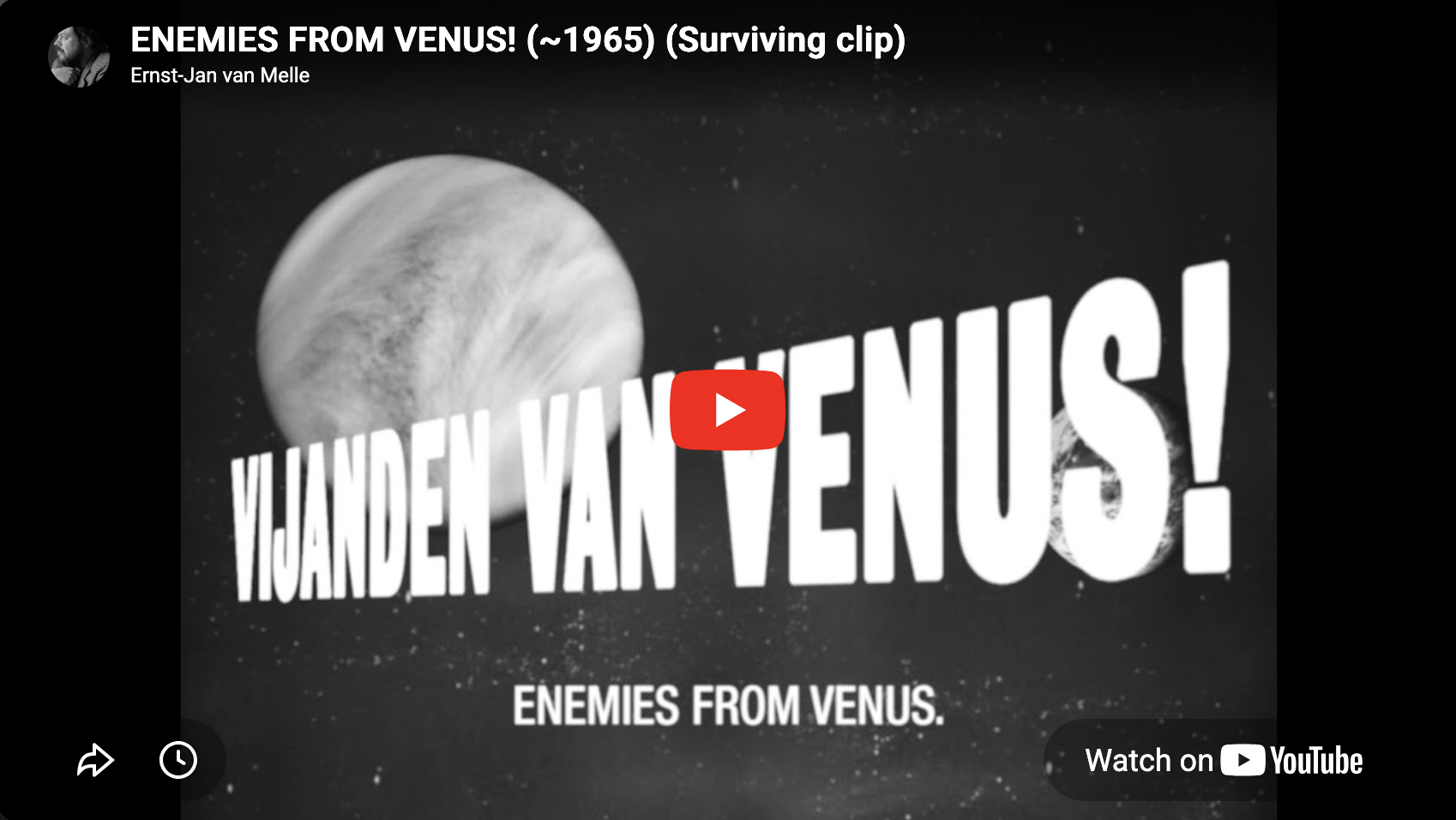
Ernst-Jan van Melle shares his experience using Ragdoll Dynamics for Maya as his main tool to animate his award-winning short, Enemies from Venus (2024).
History
What challenges were you experiencing before Ragdoll?
I’ve always been equally interested in animation and puppetry, but professionally drifted towards the former. But I’ve always wanted to capture a bit of that tactile, unpredictable dynamics you see in things like Jim Henson productions (Muppets - 1955), or indeed, the sci-fi puppetry shows made by Gerry and Sylvia Anderson (Thunderbirds - 1965) in the 60s. Something that suggests you’re watching a performance rather than a meticulously plotted sequence of events.
I’ve tried in the past to achieve that through physics simulations, but never got anywhere close to either the speed of production, or the quality, required.
The next step were VR experiments, mainly using a now-defunct VR tool called Tvori, which allowed for very rudimentary but quite responsive mocap. Unfortunately, without any physical quality to the models, the movements read as true, but nothing had the mass it should have.
Then I started looking into physics solvers again. I’d tried to make puppets using nCloth in the past, and while that sort of worked, I could never achieve the caching I’d need to actually play around with the animation.
Choosing Ragdoll
What made you choose Ragdoll over other secondary movement simulators?
Several factors, actually! One, as soon as I came across it, it looked so shockingly comprehensible for a piece of animation software. I’ve never been the most technical animator, so seeing something that looked like I could just start playing around with it was a big deal to me.
Second, the documentation and the examples - it was so easy to get started with it, to get past the stage where you’re comprehending the system and arrive at the point where you start playing around with it. There are so many pieces of software that are so obtusely structured, I forget how they work if I don’t touch them for a week. This never happened with Ragdoll Dynamics.
Third, the support was terrific. Whenever I had a question, it was extremely easy (and extremely quick) to get an answer either via email or the forums.
In all honesty, I came across Ragdoll Dynamics quite early in my search for a solver, and really didn’t look into much else after that - it was a very good fit.
Pupeteering workflow with Ragdoll
How did your animation process change by implementing Ragdoll into most of the workflow?
It became very much animation-first. In the past, I might have structured my shots first to determine the amount of actual animation that would be required, but using Ragdoll, I’d build out the performance first, and implement cameras - and even sets - at a later stage. The decision became more about how you shot what was already happening rather than fitting what happened to the shot.
It also became more iterative and experimental, as it is quite easy to alter things about the simulation; changing things around was less of an obstacle. Production-wise, it became easier to change your mind about things at a later stage and go back to change things around.
Could you describe your animation workflow for this short?
For this specific short, I wanted to get as much of the animation in the can as possible at the earliest stage. I’d made all the principal puppets first and then began setting up scenes using only primitives as the rest of the environment, then began animating, letting the physics and the collisions guide me, incorporating the odd mistake, as they felt true to what I was trying to achieve.
Then I’d start to add tons of cameras to each scene, playblast them all out, and make a full edit of the entire film. Once that was satisfactory, I’d start modeling the actual environments, which is a lot more fun to do knowing you’ve already finished the animation work and can adjust the set dressing to match. Then, finally, lighting and rendering.
How did you combine it with other tools?
There was some minor VR work in the beginning, but I dropped that quite quickly as it really wasn’t necessary. I used a VR plugin for Maya called MarUI, which means I could, for example, capture naturalistic camera movement, but it didn’t fit the style of the thing. I also got tired of strapping a huge brick to my face.
The style of your shorts is very unique, mimicking puppets but with no strings. Was that your original intent, or something that came up by experimenting?
Television series like Thunderbirds (1965) and Captain Scarlet and the Mysterons (1965) are the reason I wanted to make films, so I always had a vague idea of paying homage to them in some way. But the reason I did it in this case is that, after getting to grips with Ragdoll Dynamics, I realized it could achieve that very specific style of puppetry. Although there are no strings involved in this case, it is a question in both cases of objects motivated by external forces. So I tested it out, and it really worked extremely well. It also became an exercise in restraint, as I had to keep the limitations of balsa wood marionettes in mind at all times. It’s easy to overindulge when you can play around with your models like this.
Did your process change based on experimenting and playing around with the tool?
Yes, significantly - I think it made me much more relaxed as an animator. You’re playing around as much as you’re designing when you work the way I did, and knowing that any mistakes are easily remedied, or even unexpectedly useful, makes it a bit of an adventure, as filmmaking should be.
About
| no | header |
|---|---|
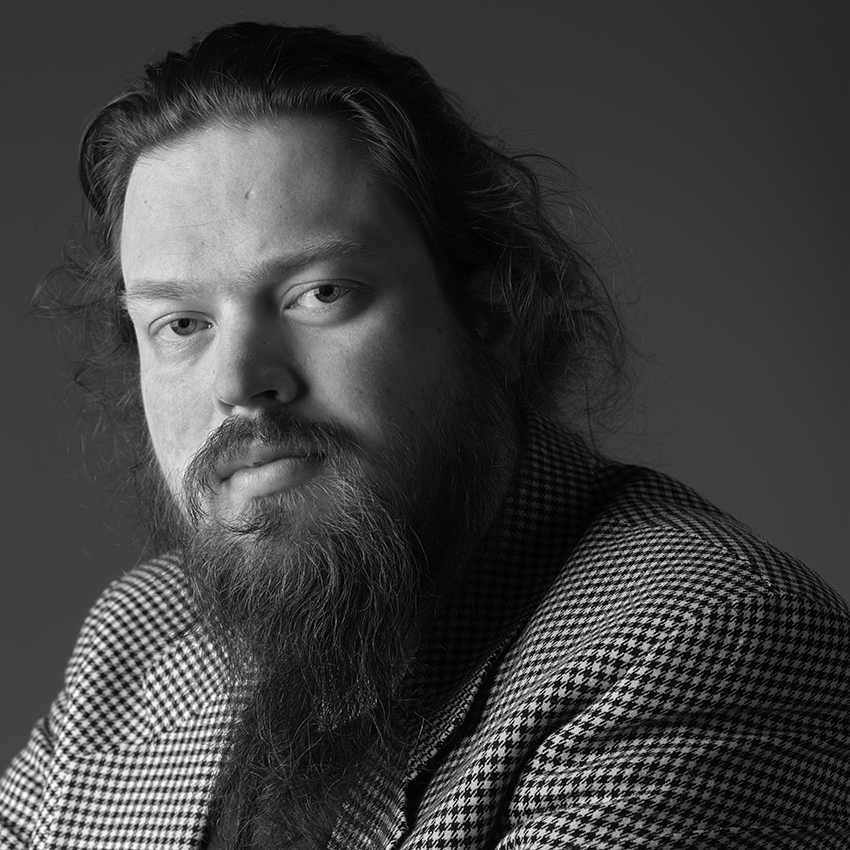 |
Ernst-Jan van Melle is an artist, speciallized in narrative design, writing for interactive works, crossmedial development and independent game design. Divides time between writing, filmmaking and miniature sculpting. You can keep up with his work through Bluesky or Instagram. |
Enemies from Venus, also known as Vijanden van Venus, is a physics-driven digital puppetry short. An homage to the 60s television series made by Gerry and Sylvia Anderson, as well a meditation about lost media and foreign television, and Dutch self-image.